

LiveRamp Achieves a 99.5% Match Rate Score on Full PII with Complete Address Data
Industry Leading, Independently Verified: LiveRamp Sets a High Industry Benchmark for Identity Graph
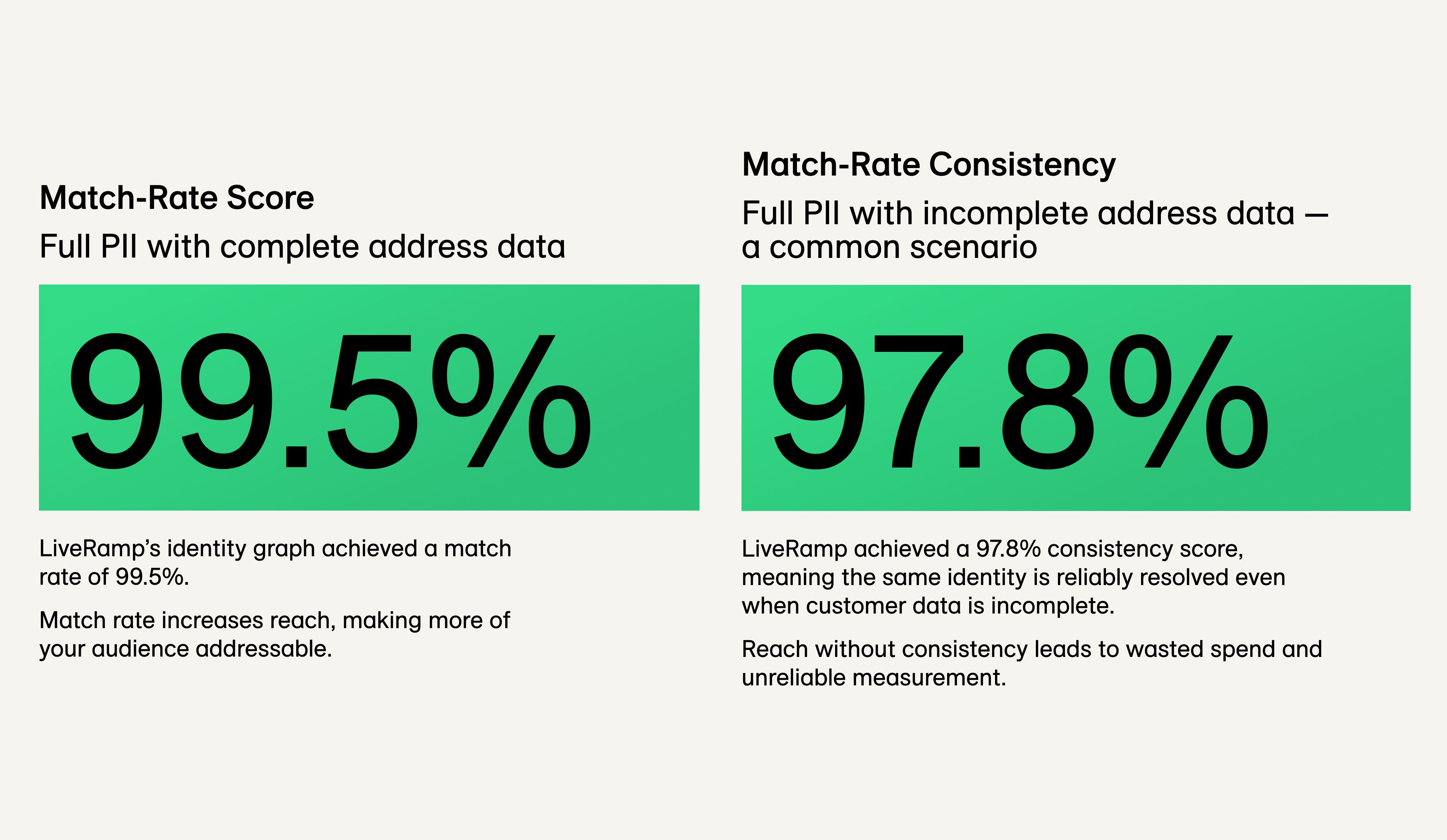
In an independent, third-party analysis conducted by Comscore CustomIQ (Q1 2026), LiveRamp achieved a 99.5% match rate on Full PII with complete address data. This proves the consistency of our identity graph and validates what we've long known, that our match rates and comprehensive identity capabilities set a high industry benchmark.
What does this mean for the brands, publishers, and platforms that use LiveRamp everyday? How do high match rates help you build enduring business value?
What match rate really means
LiveRamp’s match rate relates to the proportion of records that can be recognized by our identity graph when brands or publishers onboard their data. It effectively determines what percentage of an audience can be recognized and engaged with meaningful, measurable experiences.
The match rate means that when you onboard first-party data to LiveRamp, we should be able to recognize and append a customer-encrypted identifier to 99.5% of unique customer records.
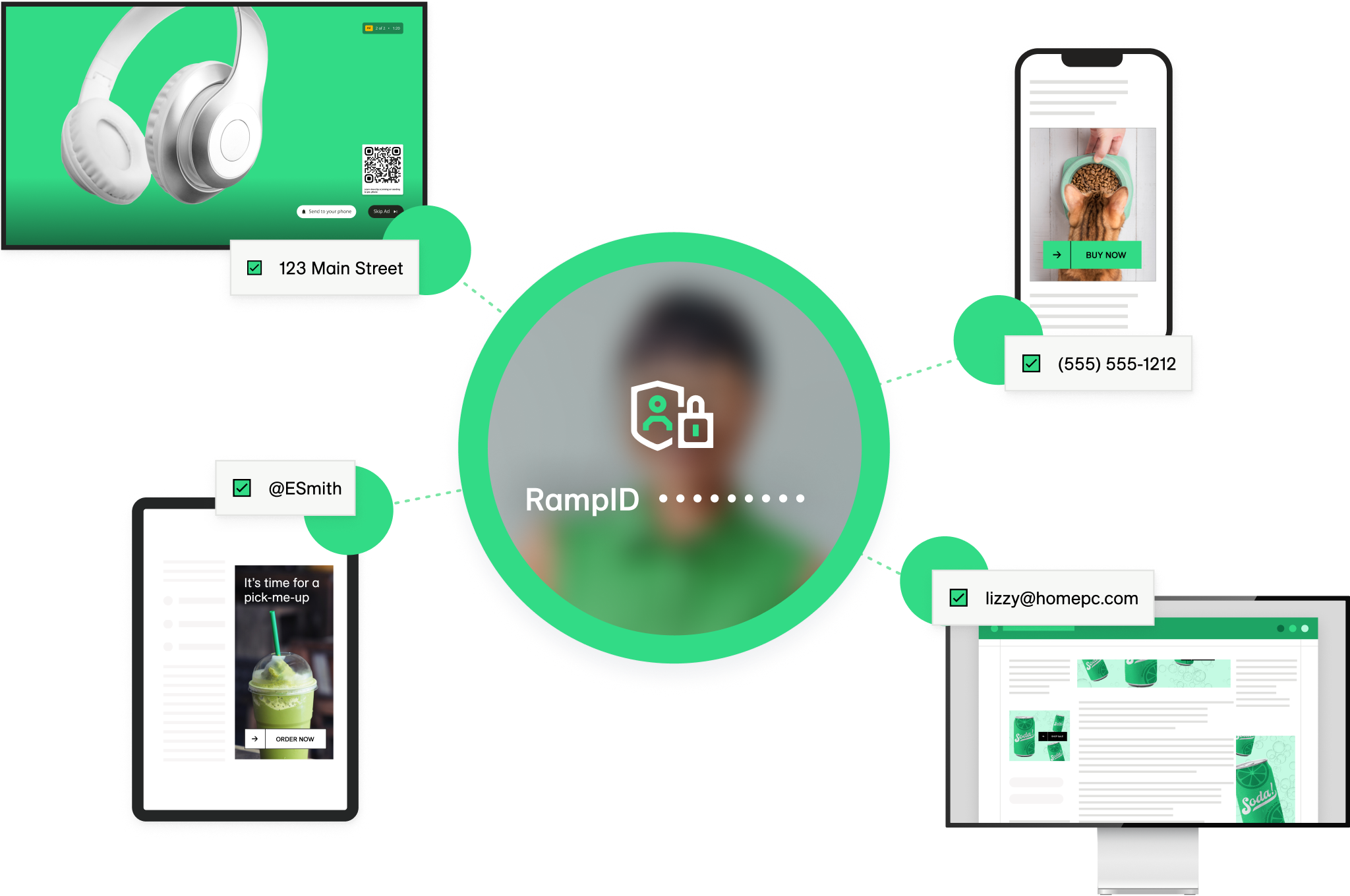
Then, using RampID – our durable, interoperable identifier that connects the marketing ecosystem – you can reach those customers with personalized experiences, wherever they are. Because RampID doesn't rely on cookies, this includes cookieless environments such as CTV, social, and programmatic. In fact, our network of over 500 media, martech, and AI partners allows brands to access coverage across destinations that comprise 92% of consumers’ engaged digital time.
{{live-identity-demo}}
Match rates + reach = revenue
Match rates for solutions that use single identifiers, such as cookies or hashed emails (HEMs), tend to plateau at around 50%. With HEMs, the best you can hope for is a match for each email address, but with LiveRamp the match can be on an email address or any other form of personally identifiable data, hence the better match rates of 99.5% with Full PII. In addition, LiveRamp has stronger reach at major destinations – around 90% compared with other solutions that reach around 60%.
Let’s see the impact this could have on campaign performance.
Imagine a mid-market fashion retailer identifies a million existing customers it wants to reach across major destinations with a targeted seasonal promotion. For this type of campaign, the retailer typically sees a 2% conversion rate, and an average basket size of $70.
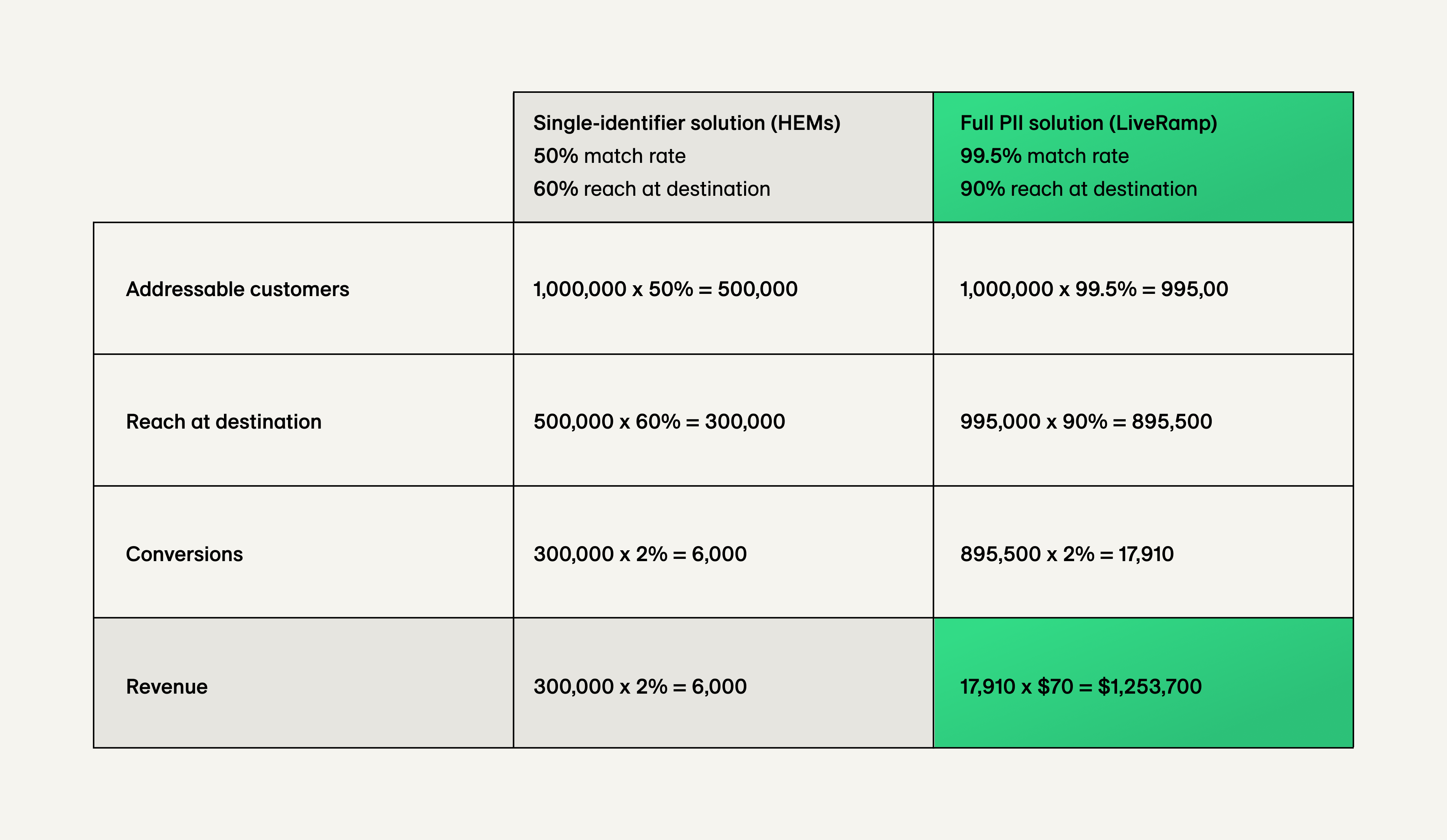
With a far higher match rate against its customer data, the retailer is able to reach more of the customers it knows are likely to engage with the seasonal promotion, and generate almost three times as much revenue. This also means there’s a positive knock-on revenue impact for the publishers and platforms through which the retailer reaches its customers.
Why an Identity Foundation is Required for AI-Powered Marketing
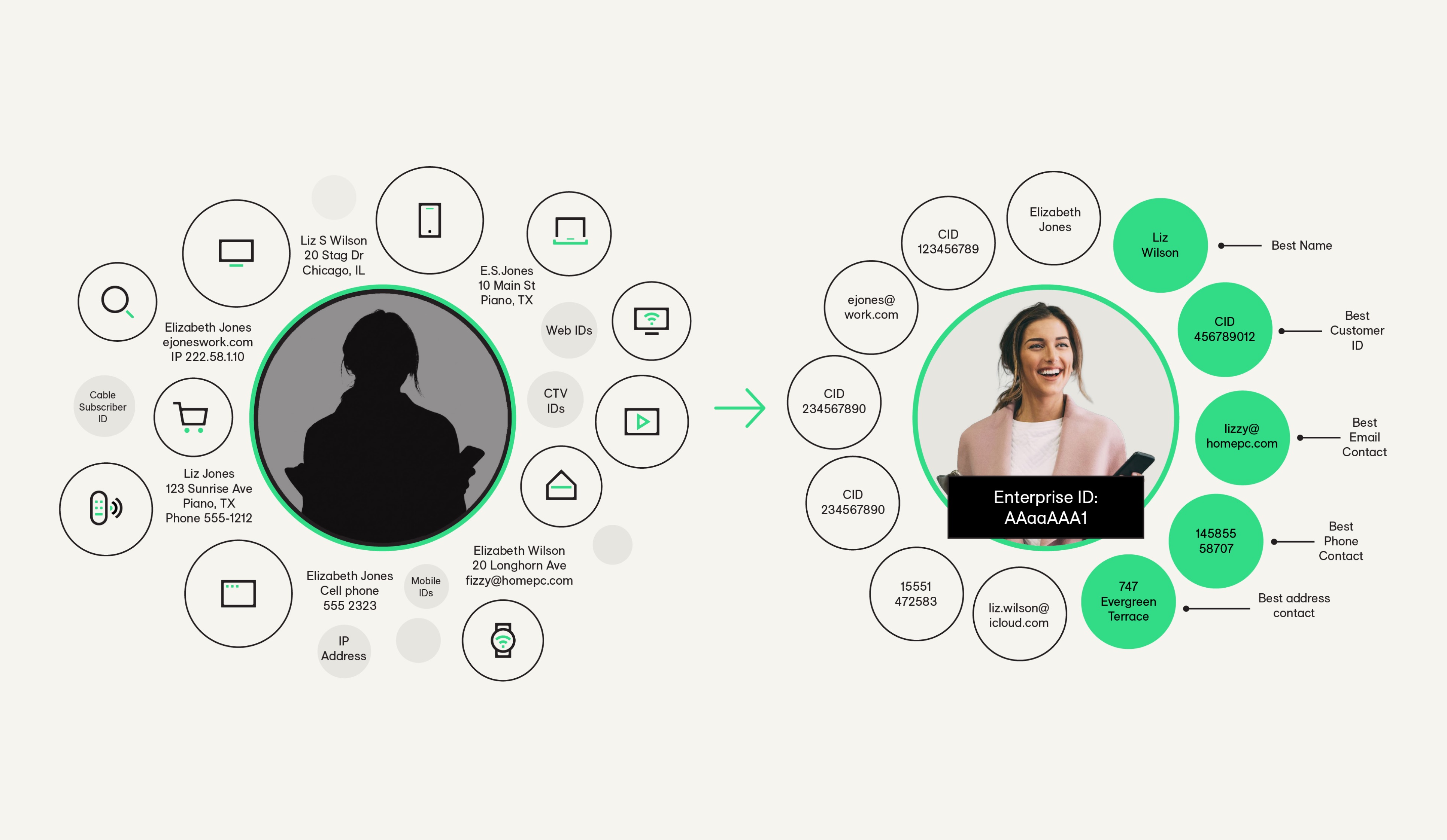
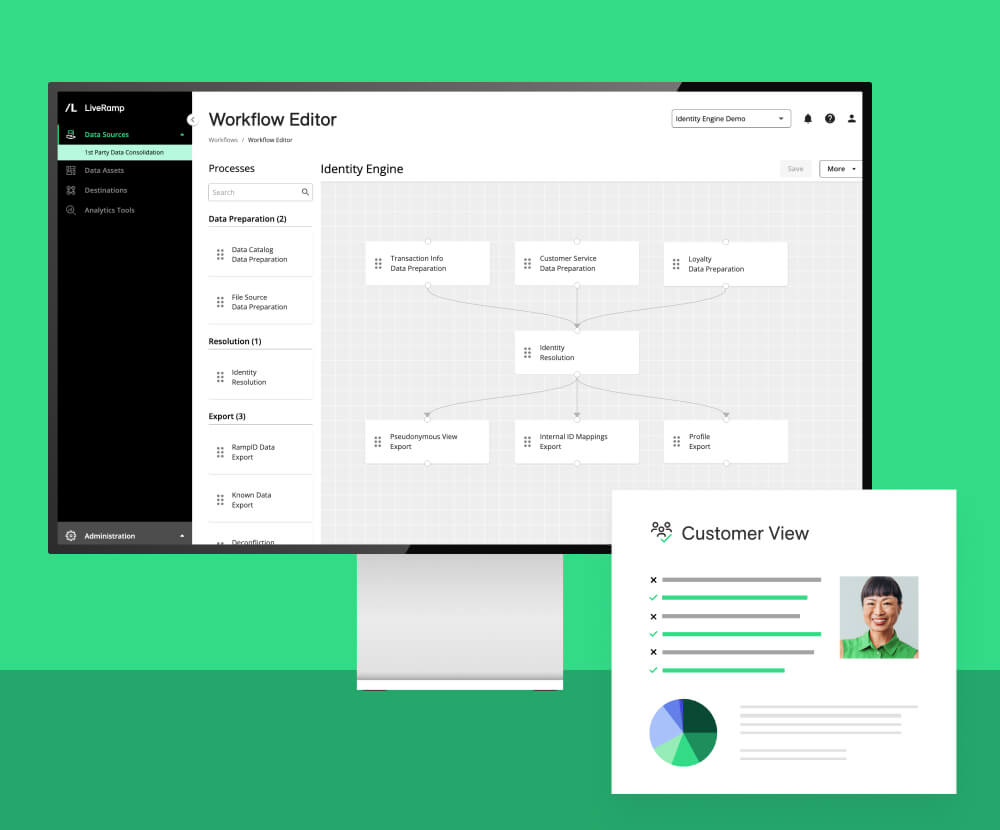
As customer journeys become ever more complex, so does their data. The average person now has over 100 data points associated with them. This includes various identifiers such as email addresses, phone numbers, postal addresses, and online device IDs, which must all be resolved into a unified customer view to enable seamless, relevant experiences.
See how that looks in practice:
At the same time, AI is completely transforming the industry. It’s shifting core marketing activities like media optimization, personalization, measurement, and creative to specialized AI agents. What’s more, it’s totally redefining how consumers discover, decide, and buy. It’s vital that these AI agents are connected with the right data so they can make the best decisions while respecting data governance as they engage with people in real time.
A unified identity framework is essential to overcome industry challenges. It transforms fragmented customer data and wasted marketing spend into optimized engagement, revenue growth, and a competitive edge. A robust enterprise identity solution with high match rates provides a comprehensive understanding of customer data, built for adherence to data governance standards. And this leads to optimized engagement, revenue growth, and competitiveness.
Whether powering AI, enabling cross-channel measurement, expanding reach, or fueling data collaboration opportunities across partners, the accuracy of your identity foundation determines the efficacy of all marketing efforts.
At LiveRamp we take a four-step approach to identity:
- Resolve: Capture your consumer data from various touchpoints, and resolve back to an individual or household.
- Build: Create a unique first-party graph that connects every touchpoint and identifies the best way to reach your customers.
- Enrich: Supplement data with new contact info and data attributes (if required), filling gaps and deepening customer understanding.
- Protect: Resolve data to a secure, durable identifier (RampID) to connect into the marketing ecosystem.
The higher the match rate at the initial “resolve” stage of the process, the more effectively you can reach target audiences across the marketing ecosystem and engage them with personalized experiences.
You can also apply lookalike modeling to target prospects with similar behavior, demographics, or preferences. And, LiveRamp is the first platform to give autonomous AI agents the ability to collaborate with one another, with governed access to identity, segmentation, activation, and measurement solutions.
{{identity-resolution-tool-blog}}
Match Rate Myth Busting
As we talk to businesses across the globe, we hear a few enduring misconceptions about both enterprise identity and match rates.
Here are three myths that are well worth addressing:
Myth One: I can get good enough results with HEMs
HEMs are often seen as an adequate approach to identity resolution. They’re a type of identifier created by applying a cryptographic hashing function to a user’s email address.
However, match rates using HEMs alone are relatively low. HEMs also lack persistence, can be reversed, and provide limited visibility across devices and channels. What’s more, HEMs are only useful for reaching and engaging existing customers. They don’t support lookalike modeling that will allow brands to expand marketing to new audiences and drive growth.
LiveRamp matches across a much broader set of signals than just HEMs, meaning our reach is far stronger. However, even when matching on email alone, LiveRamp achieves an 89.8% match rate, compared to the 40-60% industry baseline for HEM-only solutions. That's the difference between reaching nearly 9 in 10 of your customers or fewer than 6 in 10.
Customer story: Data provider doubles match rates by scaling beyond HEMs
Challenge
A leading data provider’s direct integration with a major publisher was restricted to HEMs, causing match rates to plateau at 40-60% and severely limiting the ability to meet advertiser demand.
Solution
The provider unlocked a multi-signal approach using LiveRamp’s identity infrastructure to achieve deeper connectivity across all environments.
Results
By achieving a match rate of over 95% on individual-level audiences, the provider improved addressable reach for high-value targets, ensured more impressions were monetized, and achieved higher CPMs.
Myth Two: I can resolve identity through my CDP
We frequently hear businesses say they don’t need an enterprise identity solution because they’ve implemented a customer data platform (CDP), or a similar data management solution.
CDPs have become useful infrastructure for data-driven marketing as they unify customer data scattered across systems into a single, actionable view. This requires some form of key or identifier, so it’s easy for CDP users to assume these platforms can handle enterprise identity.
However, most CDPs don’t have an identity graph – a data structure that maps relationships between various identifiers and links them to a single individual or household. Without such a graph, a CDP’s identity resolution, data enrichment, activation, and measurement capabilities are extremely limited. CDPs are useful when you know who a customer is, but consumers don’t just interact with your brand, where you know who they are. You need to use all the data and touch points available to you to personalize the experience wherever they are.
The foundation of LiveRamp’s high match rates is that we maintain the industry’s largest and most accurate identity graph. By pairing your CDP with our complementary capabilities you can achieve better match rates, enrich your data, and activate it to engage audiences across every possible marketing channel.
Myth Three: Match rates apply across the board
Our 99.5% match rate figure is based on Comscore measuring LiveRamp’s device linkages (ConsumerLinks) against about 6,000 Total Home Panels based on different permutations of name, address, phone, and email. The data used in the analysis is comparable to the first-party data most brands hold about their customers.
However, the match rates brands achieve, even with LiveRamp, can be impacted by factors like data quality and the types of identifiers that are available for matching.
In addition, once audiences are activated across the marketing ecosystem, match rates at destination platforms can vary considerably. This is because each platform has its own rules around how match rates are calculated and displayed. As one example, LiveRamp's lookback window for cookies is 90 days but for some destination platforms this is as short as 30 days, which can cause match rate discrepancies.
The fact remains, when you onboard your customer data to LiveRamp you’re going to get the highest possible match rate. And this translates to greater effectiveness in delivering and measuring marketing performance across our trusted data collaboration network.

Consumer Insights Demo
Take a deep dive into our interactive demo to discover how you can accurately identify and connect with customers across channels, partners, platforms, and cloud ecosystems.
5 Considerations for Evaluating an Identity Resolution Tool


Industry Leading, Independently Verified: LiveRamp Sets a High Industry Benchmark for Identity Graph