

RampID Powers Industry-Leading Deterministic Reach Across Omnichannel Media
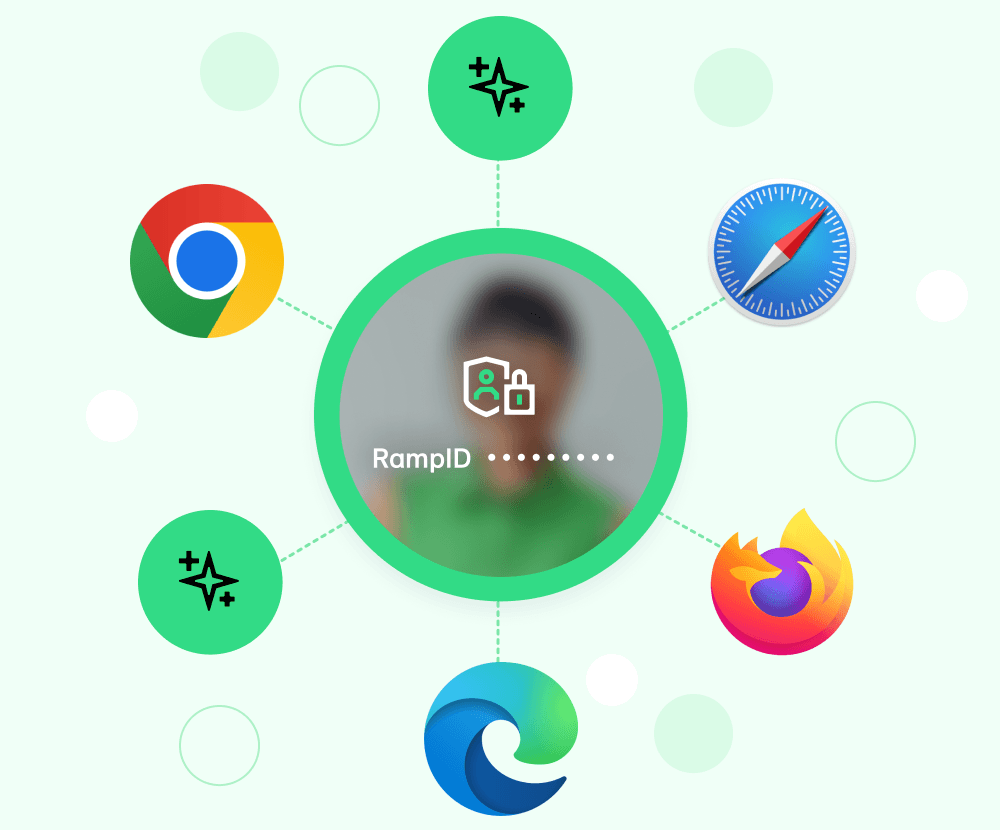
In today’s AI-powered advertising landscape, fragmented data is becoming one of marketers’ biggest performance challenges.
Customer journeys now span CTV, retail media, social, mobile, commerce media, and emerging AI-powered experiences – but most marketers still struggle to connect those signals into a complete, measurable customer view. At the same time, signal loss and maturing industry expectations continue to make traditional approaches to identity and measurement less effective.
As AI accelerates campaign automation and decision-making, marketers need a unified foundation for connecting data, activating audiences, and measuring performance everywhere customers engage.
The solution is scalable, interoperable identity.
Key takeaways
- RampID leads the industry in people-based identifier coverage, delivering greater scale across Chrome and cookieless browsers than other identifiers.
- Expanded identity coverage and connectivity create a more unified customer view, helping marketers connect data across channels and platforms.
- Interoperable identity helps marketers activate first-party data across publishers, platforms, and partners to improve omnichannel performance.
- AI-powered marketing depends on identity resolution to unify customer data, activate audiences, and measure performance across channels.
RampID leads industry in people-based identifier coverage
A 2026 LiveRamp study showed RampID leading the industry in people-based identifier coverage, helping marketers connect audiences, insights, and measurement with unmatched scale and interoperability.
RampID, the most durable, interoperable identifier for connecting the ecosystem, consistently outperformed alternative identifiers by a significant margin:
- In Chrome, RampID delivered more than double the scale of the ecosystem’s next-best identifier and more than 96x the scale of another leading identifier.
- In cookieless browsers like Safari, Firefox, and Edge, RampID provided significantly greater scale across interoperable environments, often reaching 17x the scale of other leading identifiers and nearly 3x the scale of the next-best identifier.
- Supporting consumer connectivity across the entire journey, RampID led all identifiers with an average of more than 30 touchpoints per RampID – more than twice as many touchpoints as the next-best identifier – helping marketers deliver the right message at the right time.
That expanded connectivity gives marketers a more complete view of the customer across channels, devices, and platforms, helping improve audience activation, personalization, measurement, and AI-driven optimization.
Why these results matter for marketers
AI is transforming how marketers activate campaigns, analyze performance, and engage audiences. But AI is only as effective as the data and identity signals that fuel it.
Without interoperable identity, customer data remains fragmented across platforms and devices, making it harder to connect audiences, measure outcomes, and optimize performance across increasingly complex customer journeys.
As engagement expands across AI-powered and omnichannel environments, marketers need identity that can scale securely across every touchpoint – while supporting customer trust.
How interoperable identity drives marketing performance
Scale alone isn’t enough. Identity must also work seamlessly across publishers, platforms, partners, and data environments.
Interoperable identity enables marketers to securely extend first-party data across the ecosystem, improve activation and measurement, and create more connected customer experiences across channels.
RampID helps unify fragmented environments into a more addressable and measurable ecosystem, enabling marketers to activate and measure campaigns across the open web, CTV, social, mobile, commerce media, and beyond.
Building the foundation for AI-powered marketing
The identifier at the center of a marketing stack shapes how effectively brands can connect data, activate audiences, measure performance, and scale AI-powered strategies.
In the AI era, marketers need more than reach. They need connected identity infrastructure capable of powering activation, measurement, and performance across every channel where customers engage.
When marketing depends on data, the right identifier is one of the most important choices a marketer can make.
Ready to build an identity foundation for performance-driven advertising? Let’s talk.
FAQs about deterministic identity coverage
What is a people-based identifier?
A people-based identifier connects customer interactions across devices and channels using authenticated signals instead of third-party cookies. These identifiers help marketers recognize audiences more securely and consistently.
How does deterministic identity differ from probabilistic identity?
Deterministic identity is supported by authenticated, verified signals to recognize individuals, while probabilistic identity uses statistical models and inferred connections. Deterministic approaches provide greater accuracy and consistency for audience activation and measurement.
Why is first-party data important for identity?
First-party data provides the authenticated customer information needed to build identity strategies. When combined with identity resolution, first-party data helps marketers connect customer interactions, activate audiences, and measure campaign performance across channels.
How does identity support cookieless advertising?
Identity solutions help marketers recognize and engage audiences in environments where third-party cookies are unavailable or limited. This enables audience activation and measurement across browsers, devices, and other omnichannel environments while relying less on third-party cookies.