

What is Audience Measurement? An Overview of Strategies
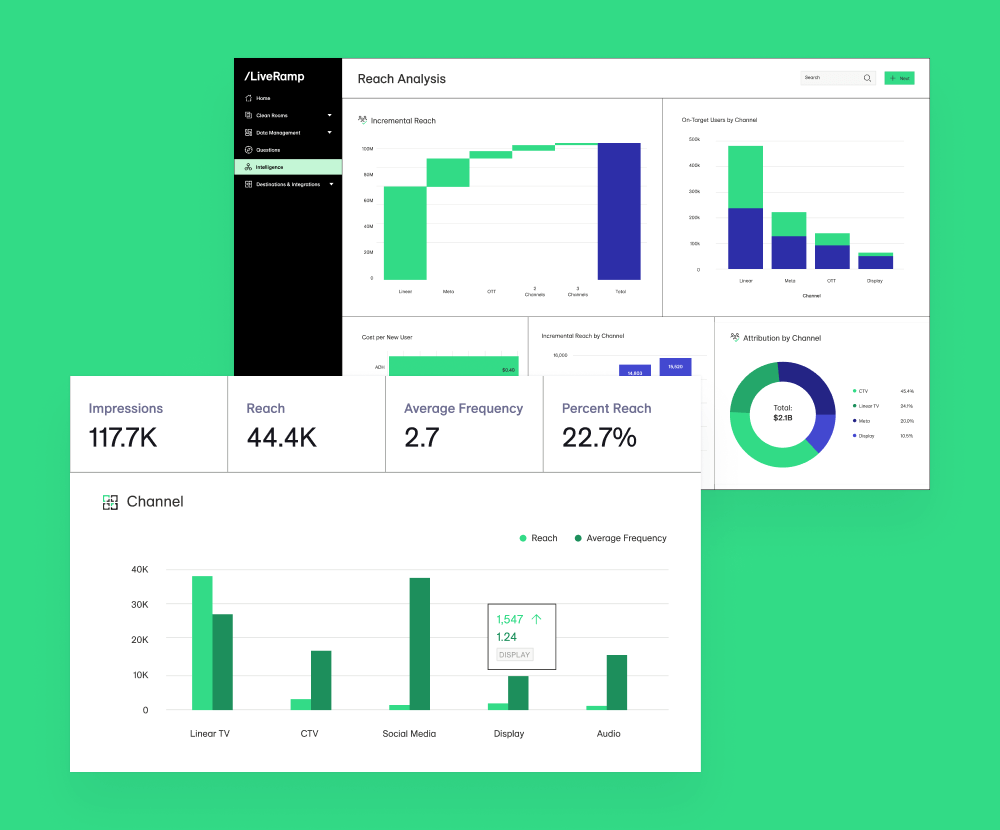
The marketing landscape is evolving faster than ever. Consumer behavior shifts constantly, and regulations continue to impact how brands like yours connect with audiences. In this environment, accurate audience measurement is the difference between thriving and falling behind. From a high-level, audience measurement is the process of understanding who your customers are and how they’re responding to your brand.
In this blog, you’ll get an overview of what audience measurement is, why it matters, and the latest strategies you need to succeed.
Key takeaways
- Audience measurement reveals who engages with your content and campaigns, enabling you to optimize performance and demonstrate clear ROI across channels
- Regulations prompted shift to authenticated identity solutions that deliver accurate measurement while respecting consumer choices
- Data collaboration is the only way to accurately measure outcomes across fragmented advertising channels, CTV, commerce media, and social platforms
- The right measurement strategy unifies identity resolution, cross-channel insights, and offers flexible controls that support privacy program requirements
What is audience measurement?
Audience measurement is the process of understanding who engages with your marketing campaigns, content, and brand experiences across channels. It goes beyond simple metrics like impressions or clicks to reveal the actual people behind the data – who they are, how they behave, and what drives them to take action.
Effective audience measurement connects data across touchpoints to create a unified view of your customers' journeys. This enables you to answer questions like:
- Who is your audience?
- Which channels drive the best outcomes?
- How do different audience segments respond to your messaging?
- What's the true ROI of your marketing investments?
- Are you reaching the right people? Are there any gaps?
In today's fragmented media landscape, audience measurement is essential for delivering personalized experiences at scale and optimizing performance across every channel that your customers spend time.
The evolution of audience measurement in a changing regulatory landscape
Audience measurement has transformed dramatically over the past decade. Traditional methods relied heavily on third-party cookies and device IDs to track consumer behavior across the web. While effective for a time, these approaches raised significant concerns and created a measurement landscape built on shaky foundations.
This shift has created an opportunity to build something better. By leveraging authenticated, consented identifiers and secure data collaboration environments, brands can measure audiences more accurately than ever before – all while supporting data governance, and consumer trust.
Why is audience measurement important?
Accurate audience measurement transforms how you connect with customers and demonstrate business value. Here's why it matters:
- Proves campaign effectiveness
- Optimizes media spend
- Enhances audience understanding
- Drives personalized experiences
- Supports data-driven decision making
- Strengthens accountability and ROI
Proves campaign effectiveness
Measurement reveals which campaigns drive results. With user and event-level data insights, you can see exactly where budget is performing well or being wasted, enabling you to make informed decisions that improve performance across every channel.
Optimizes media spend
When you understand precisely who engages with your campaigns and how they respond, you can allocate ad dollars to the channels, tactics, and audiences that deliver the strongest ROI. This precision prevents wasted spend and maximizes the impact of every marketing dollar.
Enhances audience understanding
Audience measurement uncovers rich insights about your customers' preferences, behaviors, and needs. These insights enable smarter segmentation, more relevant messaging, and experiences that resonate with each audience segment. Ultimately, this allows you to know who you’re talking to, where they spend their time, what challenges they face, and what solutions would benefit them.
Drives personalized experiences
Accurate audience measurement provides the foundation for personalization at scale. By understanding who your customers are, you can deliver consistent, relevant experiences that meet them wherever they are – whether browsing on mobile, watching CTV, or shopping in-store.
Supports data-driven decision making
Measurement replaces guesswork with evidence. Instead of relying on assumptions or aggregate data that mask important details, you gain actionable intelligence that guides strategy, informs creative decisions, and helps you achieve the outcomes that matter most to your business.
Strengthens accountability and ROI
Clear audience measurement creates transparency across your organization. You can demonstrate the ROI of marketing investments, prove how campaigns contribute to revenue growth, and build confidence with stakeholders who need to see tangible results.
{{interactive-clean-room-guide}}
Common challenges in audience measurement and how to address them
Building an effective audience measurement strategy comes with real challenges. Here's how to address them:
Privacy and identity
- The Challenge: Evolving regulations and shifting consumer expectations require new approaches to identity and measurement. Brands need ways to connect customer data across touchpoints while respecting consumer choices and supporting data governance – a balance that's difficult to achieve with legacy systems.
- How LiveRamp Can Help: LiveRamp's secure identity infrastructure, built with flexible controls that respect each party's privacy requirements, allows marketers to connect and measure audiences using durable identifiers. This supports a sustainable foundation for reaching authenticated audiences at scale.
Fragmentation and standardization
- The Challenge: Consumer journeys span dozens of platforms, devices, and channels – each with its own measurement approach. This fragmentation makes it nearly impossible to see the complete picture of campaign performance or understand how different touchpoints work together to drive results.
- How LiveRamp Can Help: LiveRamp provides a neutral, interoperable data connectivity layer that enables standardized audience measurement across channels and partners. The platform helps unify fragmented data sets, making cross-platform reporting more consistent and actionable.
Cross-media measurement
- The Challenge: Marketers are investing media spend in many channels. Even with solid identity resolution, it’s challenging to unlock de-duplicated reporting that accounts for every dollar spent.
- How LiveRamp Can Help: LiveRamp’s Cross-Media Intelligence provides a unified, secure view of media performance across channels, publishers, and tactics. It delivers deduplicated measurement anchored in durable, authenticated identity. With everything visible in one place, marketers can finally compare performance, optimize spend with confidence, and understand exactly how each touchpoint contributes to the outcomes that matter most
7 key components of an audience measurement strategy
A resilient audience measurement strategy requires several critical elements to work together. Here's what you need to do:
- Connect first-party data
- Unify data with identity resolution
- Integrate offline and online data
- Partner with data providers
- Activate audiences across channels
- Measure across channels
- Enable privacy-by-design approach
1. Connect first-party data
No matter how much of it you have, your first-party data is your most valuable asset. Connecting it across your organization and with trusted partners reveals insights that individual data sets simply can't deliver on their own – insights that drive better experiences and measurable business outcomes.
2. Unify data with identity resolution
Identity resolution creates a consistent view of your customers across all touchpoints. By accurately linking and translating authenticated identifiers, you gain the foundation for precise measurement that shows how individual consumers engage with your brand over time.
3. Integrate offline and online data
Connect in-store behavior, purchase data, and offline interactions with digital engagement. This unified view reveals the complete customer journey and helps you understand how different touchpoints influence outcomes across channels.
4. Partner with data providers
Tap into the unparalleled scale of the LiveRamp data collaboration network to access premium data sources and collaboration opportunities. The world's largest third-party data marketplace, with 500+ data providers and buyers, expands what's possible with your measurement strategy.
5. Activate audiences across channels
Reach your customers wherever they spend time – across browsers, mobile devices, CTV, and emerging platforms. Cross-channel activation helps you deliver consistent experiences and measure performance everywhere it matters.
6. Measure across channels
Build measurement approaches centered on authenticated, consented identity rather than ephemeral tracking technologies. This supports accuracy and data governance today while positioning you for success as regulations continue to evolve.
7. Enable a privacy-by-design approach
LiveRamp provides the tools for strong data governance and stays at the forefront of changing global regulations to help customers adapt to evolving regulations. Our products are built with flexible controls that respect each party's privacy requirements, supporting robust consumer consent management and compatible with data governance program controls.
Power your audience measurement strategy with LiveRamp
Accurate measurement depends on identity, connectivity, and responsible data collaboration. LiveRamp helps marketers like you unify data, connect audiences across channels, and measure outcomes with precision – all while enabling compliance and transparency.
Whether you're looking to unify measurement across CTV, commerce media, and social, or power AI-driven insights with comprehensive datasets, reach out to LiveRamp to see how our platform provides the foundation for building enduring brand and business value through responsible data collaboration.
FAQs about audience measurement
What are the basic components of an effective audience measurement strategy?
An effective strategy includes identity resolution for unified customer views, cross-channel connectivity for comprehensive reach, secure collaboration environments for partnership insights, and a privacy-by-design approach to maintain consumer trust and enable collaboration.
What is the main goal of audience measurement?
The primary goal is to understand who engages with your marketing and how they respond, enabling you to optimize experiences, demonstrate ROI, and make data-driven decisions that drive measurable business outcomes.
What tools are used for audience measurement?
Effective audience measurement relies on identity resolution solutions, clean room technology for secure collaboration, cross-channel measurement solutions, and analytics tools that unify data from multiple sources to deliver comprehensive insights.
How do privacy laws impact audience measurement?
Privacy regulations require brands to respect consumer choices and implement strong data governance. Modern measurement strategies leverage authenticated, consented identifiers that maintain accuracy while supporting compliance.
Why is first-party data important for audience measurement?
First-party data represents your direct relationship with customers and is the foundation for accurate, consented measurement. When connected with trusted partners through data collaboration, it reveals insights that no single data set can deliver alone.
How does LiveRamp support audience measurement?
LiveRamp enables brands to unify data across the ecosystem, connect audiences at scale through the world's most powerful data collaboration network, and measure outcomes with precision through advanced clean room technology and cross-media intelligence – all while supporting data governance controls.

Clean Room Explainer
Strengthen marketing performance, insights, and impact