

Incident Intelligence: How LiveRamp Manages Service Incidents with AI
Every platform incident creates two jobs: restore the service and then preserve what the organization learned. Service restoration happens in the moment. Capturing those lessons often happens later, when responders are tired, context is scattered, and the next incident is already competing for attention.
That gap is what we set out to address with LiveRamp’s internal Incident Management and AI Ops (IM-AI) application. At LiveRamp, AI incident management uses AI to gather incident context, support triage, and draft postmortems while engineers make response decisions and approve the final record. Our goal was not to replace incident commanders with an autonomous system. Instead, we wanted to make the right context available to the team sooner, reduce repetitive documentation, and give engineers better signals to help prevent the next incident.
Key takeaways
- IM-AI brings incident context into one workspace, with Jira remaining authoritative for ticket status and SLAs.
- AI helps retrieve context and draft postmortems. Engineers set severity, assess customer impact, and approve the final record.
- Rule-based alerts flag repeat incidents, tickets nearing deadlines after multiple reassignments, and unanswered reporter follow-ups.
- LiveRamp plans to measure preparation time, classification accuracy, and how often teams act before an SLA concern.
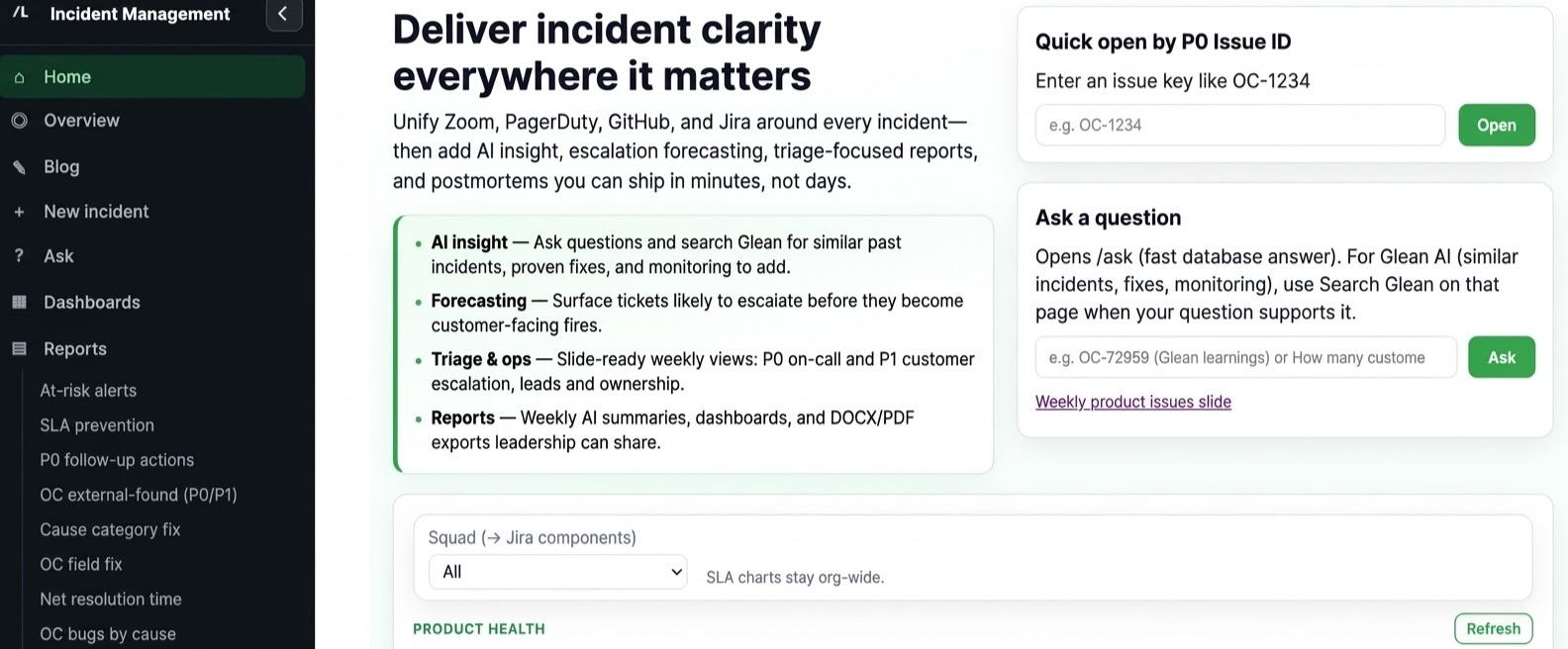
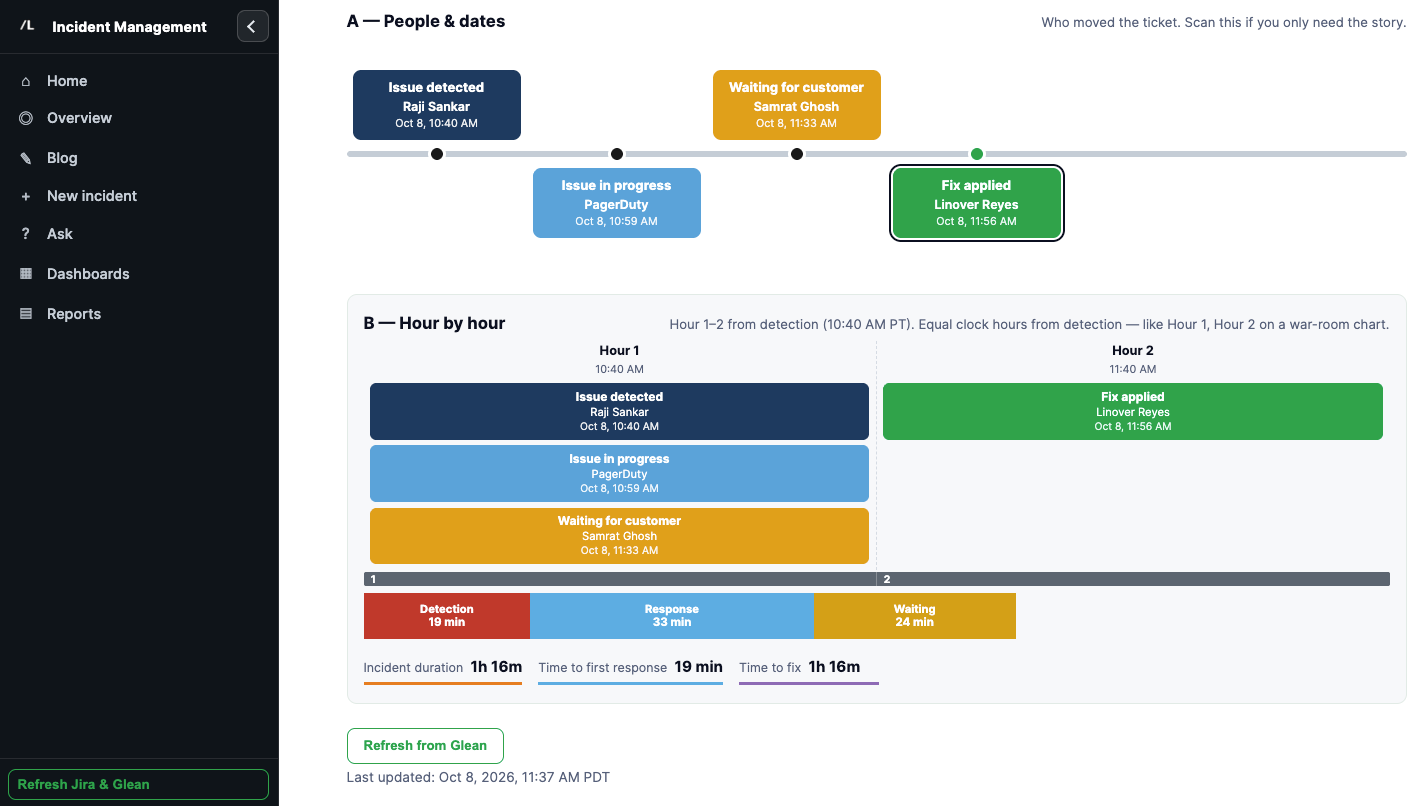
Figure 1-2: IM-AI Portal Home screen and Incident screen
The cost of fragmented incident information
Incident information rarely lives in one place. A Jira ticket may contain severity and service-level agreement (SLA) fields, while a Slack channel contains decisions and handoffs. Zoom often captures discussion. PagerDuty records the alert and response path. GitHub shows recent changes. Postmortem documents capture the final narrative. Leadership reporting then requires another pass through Jira and business intelligence data.
When these sources remain disconnected, teams pay the cost in several ways: responders repeat the same information, timelines are reconstructed manually, SLA risk is discovered too late, and postmortem quality depends on how much context can be recovered.
IM-AI was designed as a single, authenticated workspace for that lifecycle. It brings incident records into a Firestore-backed system of record, connects to operational and engineering sources, and turns the resulting context into dashboards, reports, exports, and AI-assisted workflows. Jira remains authoritative for ticket state, SLAs, and core custom fields; IM-AI adds an intelligence layer around that source of truth.
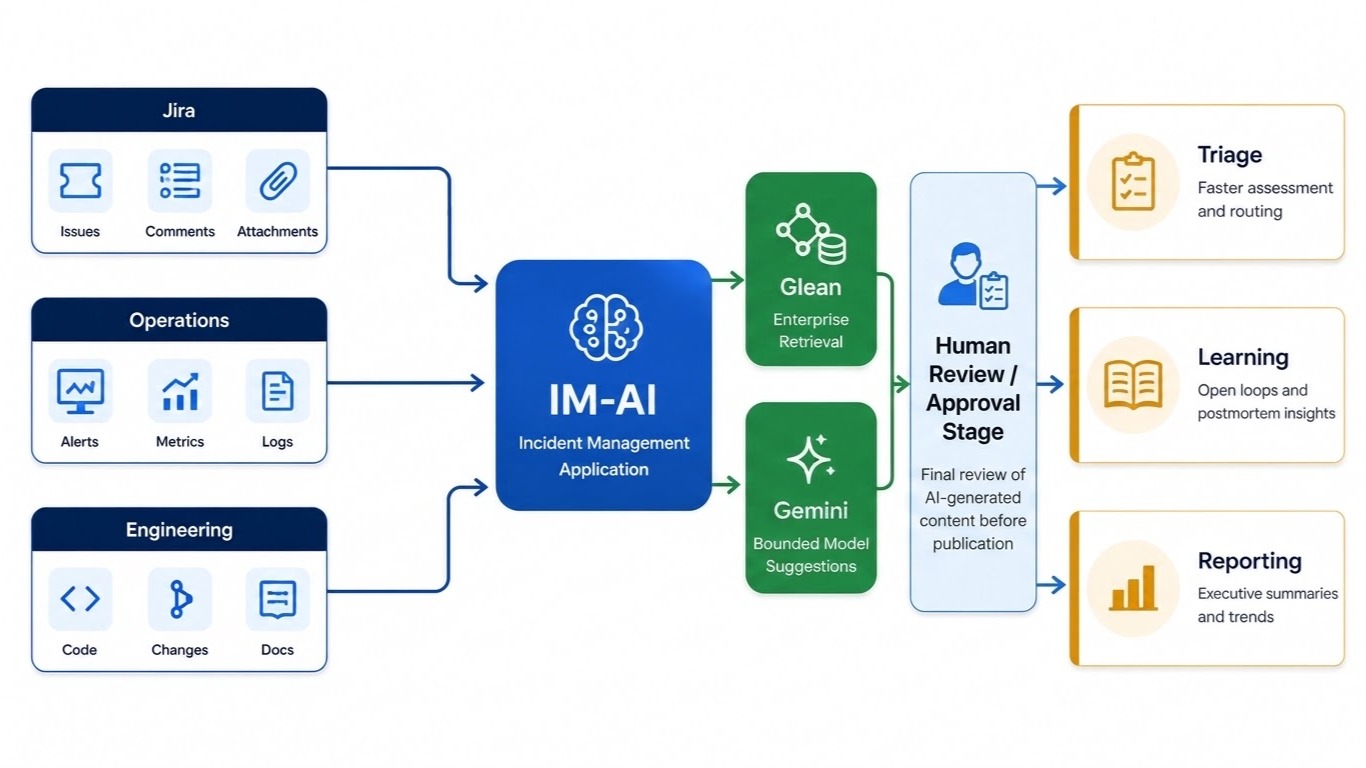
Figure 3: IM-AI connects fragmented incident signals to governed assistance and human-reviewed outputs.
Where AI agents help in incident management
For incident management, the most valuable AI workflow is an agent that understands a specific stage of the incident lifecycle, uses approved context, and produces an output that a human can review.
Today, IM-AI uses Glean as its primary enterprise AI layer for answering questions, providing summaries, weekly reporting, triage, and postmortem assistance. It also uses Gemini for a narrower task: suggesting canonical cause categories. This separation is intentional. Broad enterprise questions benefit from grounded search across internal content, while structured classification is easier to govern when the model can select only from an approved list.
That design creates a practical division of labor:
- Engineers declare incident severity, customer impact, and final response decisions.
- Agents retrieve context, summarize evidence, draft timelines, and highlight missing information.
- Reports prioritize at-risk work and surface tickets that need action.
- Humans edit, approve, and publish the final record.
The result is assistance with clear handoffs and human accountability. The AI-powered system can accelerate the work, but it does not decide what happens next or close the loop without human review.
From incident detection to postmortem
Consider a high-priority incident. An engineer opens the incident in IM-AI and pulls available context from systems such as PagerDuty, Zoom, GitHub, and Glean. For Zoom, IM-AI processes AI-generated meeting summaries from incident bridge calls using LiveRamp’s enterprise-approved AI tools. The incident record becomes a shared workspace for the response rather than another document that must be assembled later.
During triage, reports can identify escalated tickets approaching their first-response or resolution thresholds. A prevention view helps responders focus on tickets that are at risk without adding noise from issues that have already been resolved. Specifically, rule-based alerting evaluates key signals to highlight at-risk work:
- Repeat customer incidents: The same customer ID had another OC ticket opened in the last 30 days.
- Assignee hopping and approaching deadlines: Ticket has ≥3 distinct assignees for P1/P2-class priority, or ≥4 for P3 or lower (derived from changelog), paired with a resolution or due target within the next 7 days.
- Unanswered reporter follow-ups: Presence of ≥2 reporter comments after the assignee’s last comment.
Using these rules, the team can export the relevant tickets for follow-up and use the dashboard to maintain a consistent view across squads.
After mitigation, Glean-assisted workflows help create a first draft of the narrative, including timelines, contributing context, customer impact, and learnings where available. The draft is not the final postmortem. It is a starting point that reduces the blank-page problem and lets the incident commander spend more time verifying the facts and refining the analysis.
Finally, IM-AI turns recurring work into leadership-ready reporting, such as weekly product issue slides, quality metrics, quarterly views, and weekly AI summaries. Instead of manually reconciling every source, leaders can review a consistent set of outputs and focus the conversation on trends, risks, and actions.
How we govern AI-assisted incident workflows
Incident data is sensitive, and a useful AI system must respect access boundaries and operational accountability. LiveRamp’s IM-AI design principles are as important as its model integrations.
First, answers should be grounded in enterprise context rather than open-web guesses. Second, AI suggests; people decide and act. Third, secrets and service credentials should be managed through the platform rather than embedded in application code. Fourth, failures should degrade gracefully: if an AI call is unavailable, the rest of the incident page and reporting workflow should remain usable.
This approach also makes evaluation possible. Our teams plan to measure whether an agent’s suggestions are accurate, whether summaries reduce preparation time, whether users adopt the workflow, and whether prevention reports lead to action before an SLA concern. In other words, the objective is not “more AI.” The objective is better incident outcomes with a clear audit trail of where automation helped and where humans made the call.
How will we measure the impact of IM-AI?
The current plan uses target metrics rather than claiming results before they are measured. The headline goals are:
- A 50% reduction in incident-form and postmortem preparation time
- A 70% reduction in weekly leadership-slide preparation time
- A 30% reduction in cause-category misclassification among open tickets
- Action on 10 additional tickets each quarter before they present SLA concerns
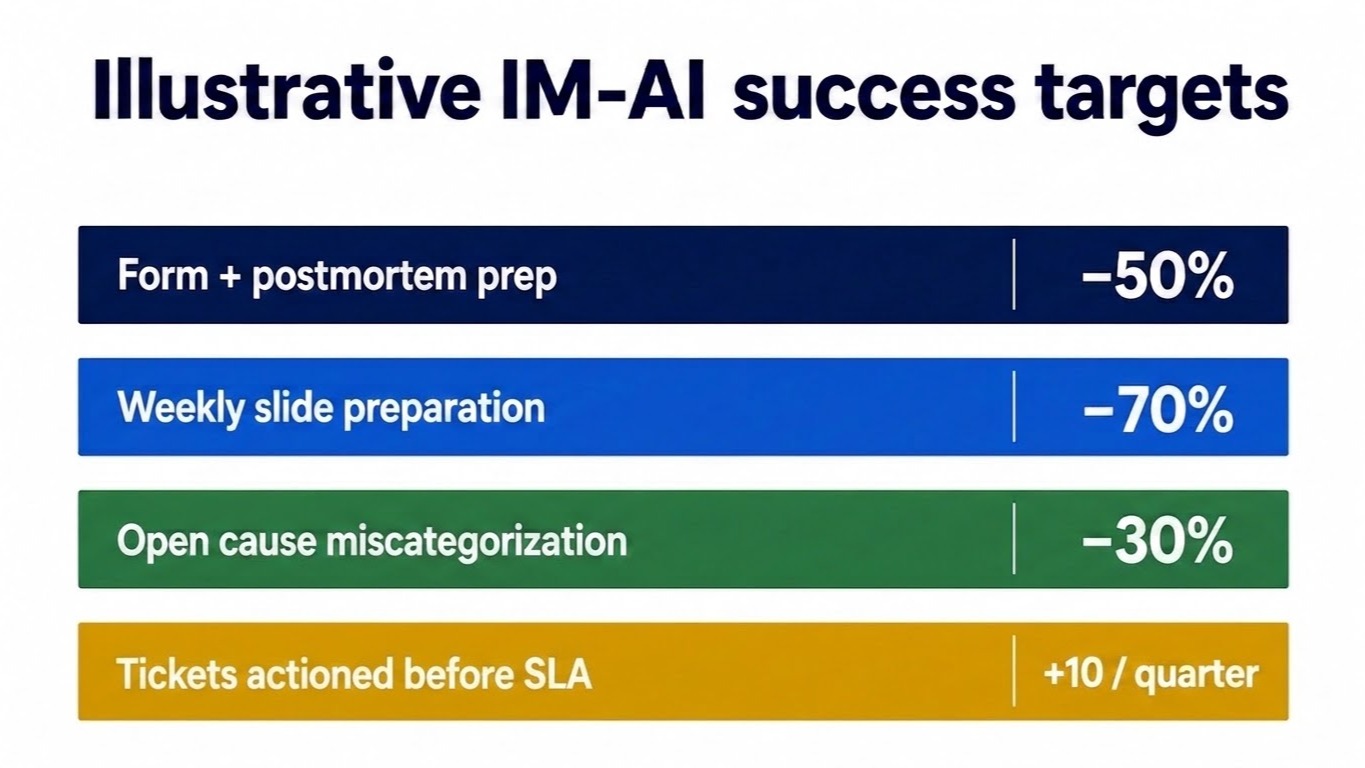
Figure 4: Target outcomes for the IM-AI implementation.
These measurements deliberately combine efficiency and quality. Saving time matters, but it is not enough if the resulting record is less accurate. Likewise, a polished report is not valuable if it does not help teams prevent incidents or improve reliability. The right scorecard connects human time saved to operational outcomes.
What comes next
The next phase is about closing the loop. Planned work includes scheduled alerts for at-risk tickets and SLA-prevention reports, deeper timeline automation, role-based views, and the ability to publish approved postmortem content back into the systems where teams collaborate. Long term, the goal is to build an automated system that proactively identifies and suggests solutions using a knowledge base, based on similar past incidents and runbooks, expanding on today's manual Glean search capabilities while incorporating feedback from what we learn from incidents into new tests, monitors, and preventive engineering work.
That roadmap reflects a broader belief about agents in engineering: the best systems are not isolated demos. They are dependable workflow components with clear boundaries, observable behavior, and a path from suggestion to verified action.
IM-AI is a step in that direction. By bringing incident context together and placing governed agents at the points where engineers lose the most time, we can spend less time documenting incidents after the fact and build a stronger foundation for continuous reliability improvement.
For more technical reviews and implementation guides, check out LiveRamp’s engineering blogs or reach out to ops@liveramp.com.