The Personalization

Playbook

Deliver Ad Experiences that Reach, Resonate, and Drive Revenue

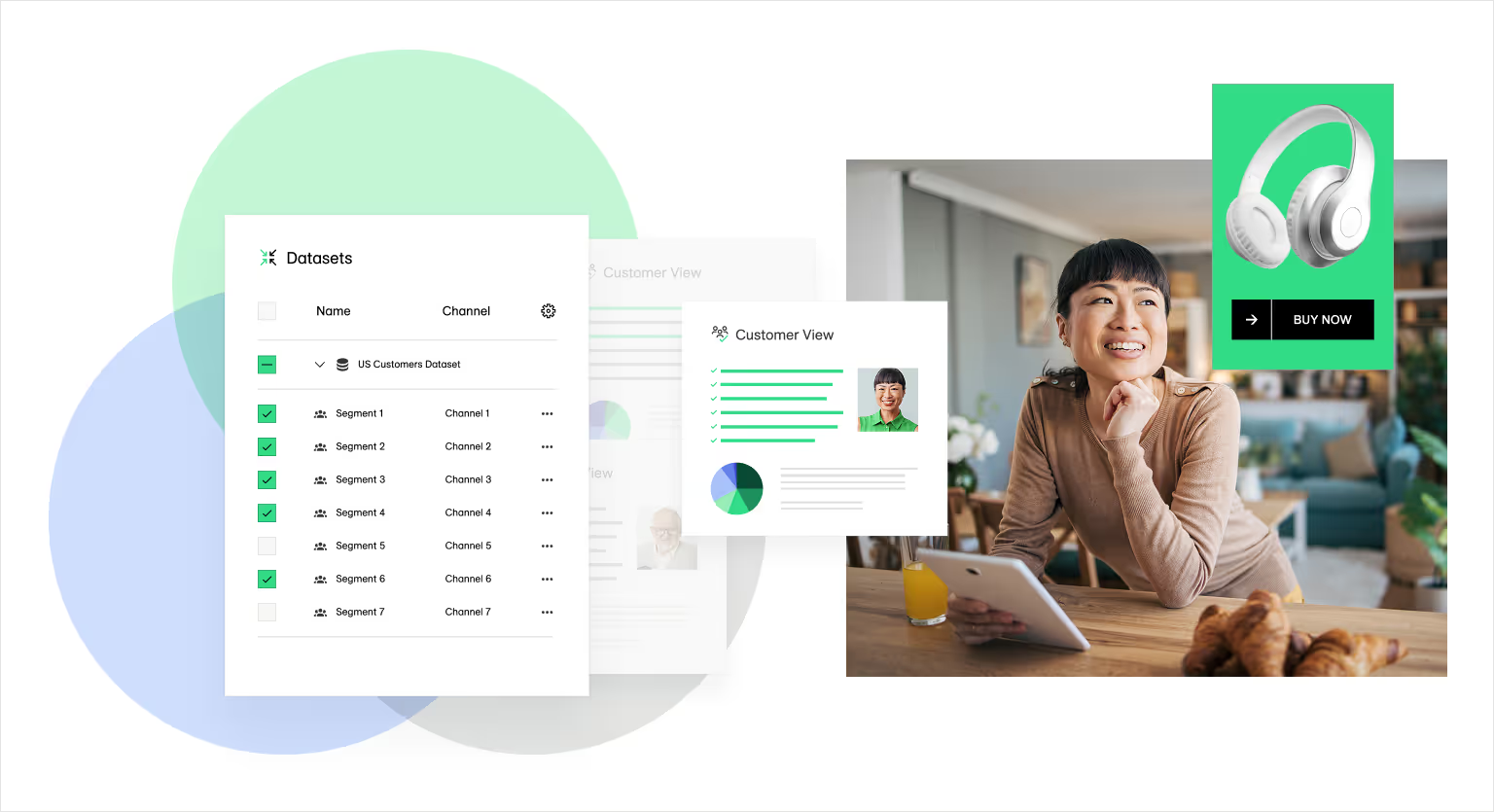
As a marketer, you know the power of a personalized experience. You know how satisfying it is when an ad pops up during your evening TV time or daily social media scroll with the exact product you were looking for — or a product you didn’t know you needed. Whether you’re shopping for a back-to-school laptop or a memorable vacation, the brand that brings you the best option wins, and it shows in performance results. In fact, companies that deliver personalized experiences generate 40% more revenue than organizations that don’t.1

You also know the downside of an ad experience that’s not personalized or feels misplaced. These are the ads you tune out or block. Not only do you ignore the brand, but you also associate it (and its ads) with negative feelings. More than 75% of consumers get frustrated when an ad or brand interaction isn’t personalized,2 and worse, almost 70% of consumers unsubscribe, disengage, or simply don’t return to brands that create an inaccurate or invasive experience.3 How do you win when customers’ time and attention (and your marketing budget) is limited? You have to hit the mark — reaching the right customers with the right message from the first interaction.

For most marketers, creating effective, individualized brand experiences isn’t for lack of trying — it’s just never been more complicated. On average, U.S. homes have at least 17 connected devices,4 including devices that are part of the ever-growing “internet of things (IoT).”5 Shoppers also juggle multiple channels and devices before making a purchase decision.6 But where there is complexity in channels, platforms, and devices, there are also endless opportunities to reach consumers when and where it matters.

In a world of rising expectations, only precise, scalable, efficient personalized marketing can deliver the experiences your customers want — and drive the results your business demands.

Personalized experiences boost revenue by

40
%

What’s blocking your
personalization potential?

There are more ways to reach consumers than ever before; but only 35% of businesses can deliver personalized experiences and more than half of U.S. business leaders in a Forrester survey said they need more data to do so.7

Here are a few reasons why marketers are still struggling:

  1. Data fragmentation
  2. Consumer privacy changes
  3. Shifts in addressability
  4. Economic uncertainty

Data fragmentation

Four in 10 advertisers say data fragmentation is their number one measurement and optimization challenge.8 But what exactly is data fragmentation? Put simply, data fragmentation happens when customer information, like behaviors, preferences, interactions, and identifiers, is spread across channels, platforms, and brands in the disconnected consumer journey — and it’s a natural result of the booming number of apps, channels, and devices. As new channels like gaming, niche social apps and publishers, and AI-driven tools emerge and popular channels like CTV grow, fragmentation persists and expands. For example, more than 80% of U.S. households now have one CTV device and up to four streaming subscriptions.9 Millennials and Gen Z are quick to adopt wearables and gaming consoles, often interacting with five or more devices per day.10

While more channels and devices create an unprecedented opportunity for greater marketing reach and personalization, it requires greater data access, accuracy, and connection everywhere consumers spend time. Without a way to consistently access and stitch together customer data, marketers can get lost between touchpoints in the customer’s journey. For example, a customer’s daily routine might consist of regularly engaging across their favorite search and news sites, apps, streaming services, and games — and they could be doing so on different phones, tablets, gaming devices, smart TV devices, and computers (personal/work) along their journey. As they switch from one channel or device to the next they may even use different names, emails, and phone numbers to authenticate (log in) across them. Marketers trying to connect these experiences struggle to keep up as customers bounce across devices, channels, and changing authentication methods. Even with investments in first-party data strategies and CDPs, brand still struggle to stitch these touchpoints together.

Consumer privacy changes

Another important change in advertising is better protection for consumer data. Lawmakers and privacy regulators are as concerned about this as customers. More than 80% of the global population is now protected by privacy laws, with more to come.11 In the U.S., regulations on data collection and usage are tightening, and there’s a new focus on AI regulations,12 specifically related to the misuse of personal data and discriminatory outcomes.

Consumers are also becoming more educated on their data privacy rights and protections. Almost 85% of shoppers prioritize data protection and 67% have already updated their privacy settings.13 Brands know data privacy is critical — at least half of U.S. business leaders surveyed by Forrester are actively partnering with technology companies that can meet security requirements and global privacy regulations. To build lasting brand trust and loyalty, advertisers must meet growing data privacy demands while responsibly serving experiences made with each customer in mind.

Shifts in addressability

One of the most significant shifts in addressability has been the slow move away from third-party identifiers, such as cookies, which marketers have historically relied on to stitch customer journeys together. Marketers are racing to adjust to cookieless channels like CTV as well as customers’ vigilance to protect their privacy — 65% of adults in the U.S. now turn off cookies and website tracking.14 As traditional methods of gathering customer insights disappear and evolve, marketers need new ways to access addressable data for campaign planning, personalization, and measurement.

Economic uncertainty

In today’s economy, campaign dollars must show return on investment (ROI)
and growth. But there are also more options for advertising budgets than ever before. While marketers carefully consider the suite of channels, platforms, and partnerships to boost with paid resources, budgets are shrinking in response to economic challenges. On average, marketing budgets have fallen to 7.7% of overall company revenue, down from 9.1% in 2023.15 As a result, the advertising industry has been launched into an outcomes era where every marketer, publisher, and partner is measured by their ability to drive growth. Moving forward, advertisers who can prove they’re reaching the right audiences with the right message at the perfect time will win — and winning in advertising today means:

  • Partnering with the media partners and destinations where your customers engage and spend time
  • Testing new partners to reach new audiences with personalized experiences
  • Adopting tools to access clean, enriched data, create high-value segments that match to every touchpoint, and activate across partners to maximize reach
  • Integrating smart, efficient activation strategies that drive measurable campaign performance, reduce marketing waste, and power business growth

The 5 Building Blocks of Smarter Personalization

Omnichannel personalization takes some legwork, but with the right preparation, the payoff is huge. Here’s what it takes.

A strong identity foundation

Delivering personalized experiences starts with getting identity right — and that begins by resolving every customer touchpoint. This process, known as identity resolution, ensures that each interaction is accurately matched to the right person. Unifying and deduplicating fragmented data across devices, emails, and IDs ensures that your customer profiles are accurate, consistent, and up-to-date at both the individual and household level.

To protect customer trust, your identity resolution solution must replace personally identifiable information (PII) such as names, emails, or phone numbers with a durable, interoperable, and secure identifier, such as LiveRamp’s RampID. This allows you to activate data across partners and platforms without exposing sensitive customer information.

With a strong identity foundation in place, you unlock the ability to scale segmentation, targeting, and activation with confidence. Accurate identity ensures you can maximize match rates and provide more meaningful customer experiences while preserving trust at every step.

Identity resolution ensures each interaction is accurately matched to the right person
Ask yourself

Is my customer data unified and deduplicated into accurate profiles at a household and individual level?

Advanced audience segmentation

You don’t need segmentation to activate your data — but you do need it to personalize effectively. Resolving your customer data gives you the foundation to build high-value audience segments, so you can deliver relevant experiences that resonate. For example, you’ll know exactly which customers have school-age children and can target them with your next back-to-school campaign.

To segment more granular audiences, you need a way to connect your organization’s first-party data with second-, and third-party data sources (such as a robust data marketplace) in one place. Connecting data from your organization with external partners in a single, trustworthy platform not only helps you enrich customer profiles with additional attributes, like demographic or behavioral insights, but also enables advanced audience segmentation, collaboration, and analysis for optimization. Advanced segmentation includes AI capabilities that support lookalike modeling and enhanced match metrics, so you know you’re reaching the right audiences with the right message — unlocking greater relevance and precise targeting for more predictable campaign outcomes.

Resolve your customer data in order to deliver relevant experiences
Ask yourself

Am I creating the highest-quality, most accurate audience segments for the best chance to personalize campaigns and drive conversions?

Interoperability across the ecosystem

Solving data fragmentation and unlocking customer insights everywhere calls for a connected approach. To link customer information across teams, platforms, and partners accurately and at scale, the advertising ecosystem relies on trusted identity resolution. Solutions like LiveRamp’s RampID link and translate any combination of identifiers — from authenticated audiences to third-party signals — while helping to respect each customer and partners’ privacy rules and preferences. When this connection happens, the entire advertising ecosystem works together: brands can gain a clearer view of their customers, deliver a consistent customer experience on every device and channel, and collaborate more easily with partners.

Not all identifiers can deliver true interoperability. Unlike hashed emails (HEMs), RampID is embedded across every major platform, including Meta, Google, and Pinterest, and connects with authenticated audiences from more than 21,000 publishers. As a result, the prevalence of RampID solves for signal loss, powers persistent addressability, and helps brands reach consumers on 92% of the digital channels they spend time.

Hashed Emails (HEMs)
RampID

Identifier Type

Email addresses, which are a type
of shared PII

A persistent, interoperable
identifier that adapts as user
info changes without moving or
revealing PII

Data Freshness

Static — can become outdated
quickly, reducing match rates and
customer reach

Stays current and reliable for each
customer, increasing match rates
and reach

Scalability

Limited scale — each platform
requires the exact same customer
email for a HEMs match, limiting
performance

Unlocks broad reach across walled
gardens, CTV, and programmatic
platforms

Interoperability

Not interoperable — requires
rehashing and remapping per
device or platform

Fully interoperable across channels
and devices without manual
adjustments

Activation Efficiency

1-to-1 data sharing across
platforms increases IT/
development load, slows activation,
and requires PII sharing

1-to-many activation with a
persistent identifier streamlines
activation and reduces PII
exposure

Business Outcomes

Lower match rates reduce the
impact of personalization

Higher match rates, stronger
partner alignment, and better
personalization

Ask yourself

Am I reaching customers on all of their favorite publishers and platforms?

A powerful network of partners

Even the most advanced marketers with the cleanest data can’t deliver truly innovative personalization alone. Scaling addressable audiences requires data collaboration — the secure connection of information across both your organization and trusted partners to uncover insights and opportunities that no single data set can provide. The key to effective data collaboration? A powerful network of brand and media partners.

Because you can’t be everywhere your customers are, partnering is essential. By tapping into a strong network, you maximize your addressable reach along the entire consumer journey. This enables you to deliver real-time personalization, optimize campaign performance, and prove accurate ROI to key stakeholders.

This is exactly what the world’s most powerful data collaboration network makes possible. With LiveRamp, marketers can responsibly connect, segment, activate, and enhance customer data wherever it lives — in your own environment or across clouds — to achieve 44% higher match rates than HEMs across more than 500 of the most important media and martech platforms.

RampID delivers a higher match than HEMs

44
%
Ask yourself

Do I have the right partners in place to scale reach and personalization for my target audience?

Optimization and measurement

Once you have data-driven personalization in motion, you’ll need to gauge performance — first by individual platform and then across your media spread.

Start by implementing conversion APIs (CAPIs) with each platform you activate your data on. The CAPIs will send transaction and event signals back, enabling in-flight campaign optimization. This feedback helps marketers deliver smarter, more cost-efficient campaigns by revealing which tactics are driving success. For example, you can answer questions like: Did more conversions come from the personalized promo banner on your website or from your Meta ad creative? How does improving ad relevance impact cost per acquisition (CPA)?

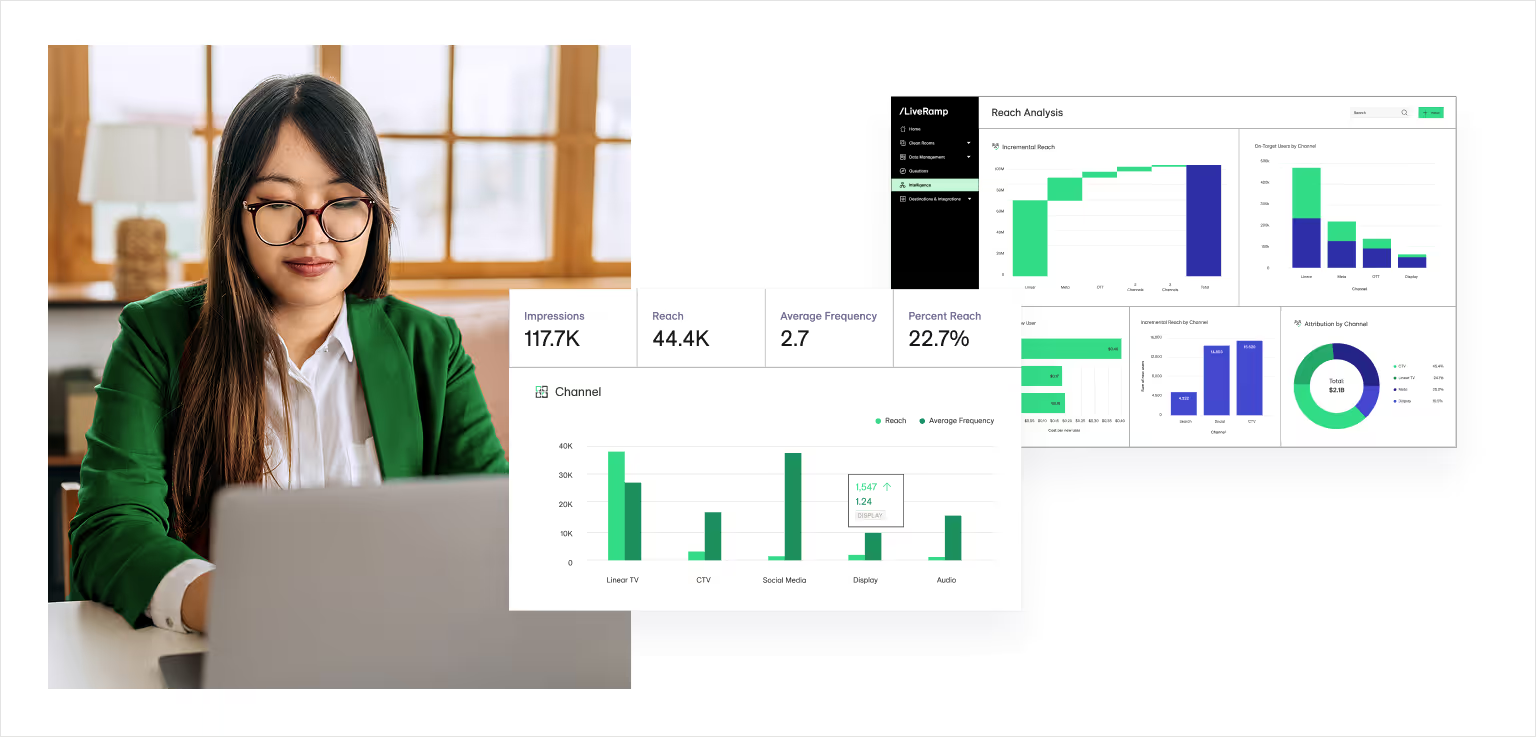
Once you’re able to optimize by platform, use cross-media measurement to see a holistic view of performance across all channels. Using a consistent identity framework like RampID makes it possible to measure customer data from different platforms in one unified view. This stronger measurement foundation doesn’t just improve short-term performance; it fuels better personalization over time.

With clear signals on customer preferences and behavior, marketers can refine segments and activate smarter to deliver more relevant experiences — strengthening campaigns today and customer loyalty in the long term.

Use cross-media measurement to see a holistic view of performance across all channels
Ask yourself

Do I have the tools to measure what’s working and adjust campaigns in real time?

Kellie Jones
Director, KASA D2C & Digital Marketing, Whirlpool Corporation
At Whirlpool, we see data collaboration as a way to help us create better consumer experiences. We’ve scratched the surface in activations, and it’s not only about pricing and promotion anymore. It goes deeper than that — helping us show up in better ways for our customers and make their experience more personal.

13 Proven Strategies for Personalization Success

How do you turn customer data into customer wins? With savvy personalization strategies built to reach, resonate, and drive revenue for long-lasting loyalty and growth.

  1. Enhance lookalike modeling: Identify, segment, and reach new high-intent audiences that resemble your best customers across platforms. AI-powered tools like lookalike modeling and behavioral analytics further refine audience segmentation and activation with greater speed and precision.
  2. Suppress low-intent audiences: Exclude customers from your audience segments who are unlikely to convert or have already taken action, like a recent purchase. This ensures that you’re targeting the right people with the right message — reducing budget waste, improving campaign efficiency, and driving ROI.
  3. Retarget your best customers sooner: Recognize and retarget high-intent audiences on new channels to continue to drive action. Use engagement events and conversions as inputs to optimize in-flight campaigns.
  4. Expand activation destinations: Diversify your destinations to reach consumers on every platform they spend time, from traditional publishers to up-and-coming AI and gaming platforms.
  5. Optimize attribution: Identify which channels and touchpoints contribute to incremental conversions or net-new customers, so you can allocate budget and direct personalization efforts more effectively.
  6. Reward engagement with early access: Reach your best customers first with exclusive offers and deals they can’t get anywhere else.
  7. Use adaptive personalization to drive lifetime value: Use behavior and demographic insights to serve custom content now and keep refining as you learn more, turning every interaction into a chance to drive repeat purchases and deeper loyalty.
  8. Deliver dynamic creative for every context: Tailor your ad creative and messaging to the specific context of each platform — a live sports event, seasonal shopping moment, or weather-based trigger, for example — leading to more relevant, engaging, and seamless experiences for your audience.
  9. Predictive personalization: Use performance data to forecast customer needs and deliver proactive suggestions or reminders, such as restocking consumables or service needs. AI and machine learning take this a step further by enabling dynamic, context-aware experiences that feel seamless and relevant — no matter where or when customers engage.
  10. Loyalty and upsell campaigns: Combine activated data from purchase history and predicted lifetime value to personalize loyalty program messaging or suggest subscription upgrades, exclusive previews, or tier-based incentives.
  11. Re-engagement campaigns for lapsed customers: Activate historical data to identify when a customer hasn’t interacted for a certain period. Based on past preferences or purchases, brands can serve personalized “We miss you” offers or product updates that match their interests.
  12. Collaborate with complementary brand partners: Share customer knowledge with strategic partners for innovative co-marketing offers, bundled deals, exclusive affinity packages, or to simply access new customer insights. Together, you’ll have stronger, data-driven insights to reach your ‌ customers across the channels most relevant to them.
  13. Collaborate with media partners: Build more granular audiences with intelligence or context from media partners, such as where, when, and how customers engage, to drive marketing efficiency and greater ROAS.

How the NHL, Delta Airlines, and Harley-Davidson win with personalization

Delivering data-driven delight to every NHL fan

For sports leagues and their partners, sustaining fan engagement year-round takes a data-driven approach to personalization. To better understand what fuels fandom — from lifelong loyalists to younger fans drawn to off-the-ice stories — the NHL uses real-time analytics to craft hyper-personalized experiences. By building smarter audience segments with historical, cultural, and geographic insights, the league improves engagement with digital experiences and scales personalization with initiatives like the NHL All-Star Vote.

Curran Raclin
VP, Fan Engagement, Analytics & Research, NHL
We’re not only looking to cater to fans who played hockey growing up. We’re focused on playing the long game and reaching out to people who may not be traditional sports fans, but are interested in the culture and the players and everything else.

Making every mile memorable with Delta Airlines

Nearly 200 million people fly with Delta Airlines each year, and more than half are loyal SkyMiles members — creating an opportunity to transform travel into a truly personalized experience. Passengers can curate their own entertainment titles onboard, continue watching a movie they didn’t finish on their last flight, and access flight connection information tailored to their journey. Collaboration with partners like Paramount+, YouTube, and T-Mobile lets Delta deliver next-level value beyond the seatback screen — giving travelers thoughtful, contextual experiences.

Sarah Downs
Director of Engagement & Optimization, Delta Airlines
If you’ve got really strong first-party data and you can find a partner that has really relevant customer attributes that can enrich what you have, you can start to bring those things together. That is where you see a little bit of the magic happen and be able to deliver an experience together that strengthens the value proposition for the customer.

Unified identity means unlimited potential for Harley-Davidson

Harley-Davidson is transforming its marketing activation, measurement, and insights with a unified identity foundation. They began by structuring an identity roadmap and demonstrating impact through incremental use cases. Today, Harley-Davidson uses clean rooms to enable closed-loop measurement, predictive targeting, and scalable addressability.

Brian Enderlein
Director, Growth Hacking, Harley-Davidson
We can’t build a content strategy — we can’t build a personalization strategy — without having identification. Because when you want to be customer first, you have to know who your customers are…We work with partners like LiveRamp to help us really make an impact and quickly, because customers expect personalization and communication. They expect you as a brand to know more about them than you probably do.

Reach authenticated audiences at scale and deliver personalized experiences everywhere it matters. Experience our interactive demo to see how LiveRamp can help you create customer experiences that connect and convert.

Ready to elevate your personalization strategy?

Endnotes

  1. Arora, N., Liu, W. W., Robinson , K., Stein, E., Ensslen, D., & Schüler, G. (2021, November 12). The value of getting personalization right—Or wrong—Is multiplying. McKinsey & Company.
  2. Arora, N., Liu, W. W., Robinson , K., Stein, E., Ensslen, D., & Schüler, G. (2021, November 12). The value of getting personalization right—Or wrong—Is multiplying. McKinsey & Company.
  3. Abraham, M., Geng, T., Kogler, F., & Taylor, L. (2024, December 12). What Consumers Want from Personalization. Boston Consulting Group.
  4. (2024, January 10). Average U.S. Internet Home Had 17 Connected Devices in 2023. Parks Associates.
  5. What is the Internet of Things (IoT)? IBM.
  6. Sopadjieva, E., Dholakia, U. M., & Benjamin, B. (2017, January 3). A Study of 46,000 Shoppers Shows That Omnichannel Retailing Works. Harvard Business Review.
  7. Kumar, N. (2025, January 23). 79 Personalization Statistics & Trends of 2025. Demand Sage.
  8. McBride, N. (2025, April 17). Guide to Solving Data Fragmentation in Programmatic Advertising. Disqo.
  9. Graveman, S. (n.d.). What Advertisers Need to Know About Market Fragmentation. MNTN Research.
  10. Widener, C., Arbanas, J., Van Dyke, D., Arkenberg, C., Matheson, B., & Auxier, B. (2025, March 25). 2025 Digital Media Trends: Social platforms are becoming a dominant force in media and entertainment. Deloitte Center for Technology, Media & Telecommunications.
  11. Clark, S. (2025, March 3). The State of Consumer Data Privacy Legislation in 2025. CMS Wire.
  12. Taylor, A., Friedman, C., & Fishel, G. (2025, May 21). State AGs fill the AI regulatory void. Reuters.
  13. Clark, S. (2025, March 3). The State of Consumer Data Privacy Legislation in 2025. CMS Wire.
  14. Lebow, S. (2024, January 17). The majority of US adults will turn off cookies to manage privacy online. EMARKETER.
  15. (2024, May 13). Gartner CMO Survey Reveals Marketing Budgets Have Dropped to 7.7% of Overall Company Revenue in 2024. Gartner.